

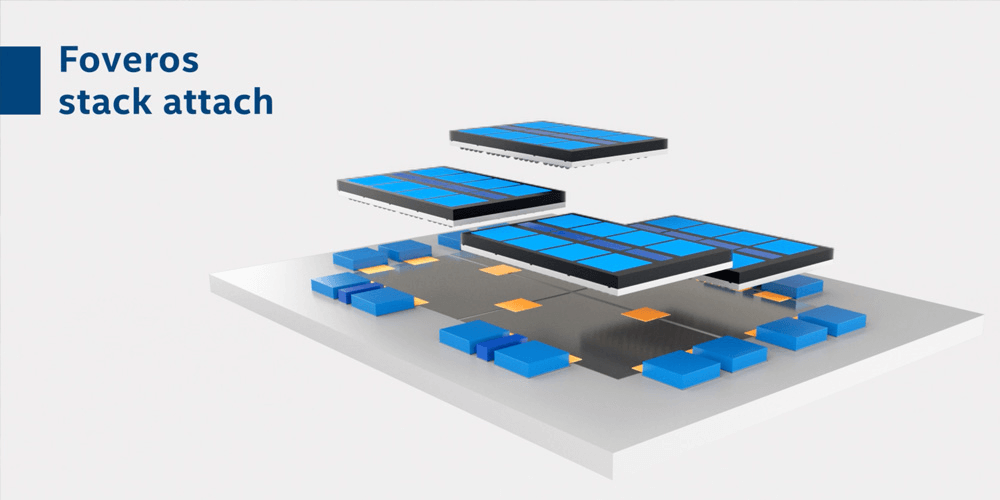
One of the most important shifts in semiconductor manufacturing today is not just the continued growth of wafer-level packaging (WLP), but the increasing reliance on enabling, highly specialized process technologies. As device architectures evolve toward heterogeneous integration (HI) and chiplet-based designs, key technologies such as wet processing, electrochemical plating (ECP), plasma-enhanced chemical vapor deposition (PECVD), and emerging panel-level packaging (PLP) have become central to achieving the required levels of precision, performance, and scalability.
WLP remains a cornerstone of advanced packaging (AP), encompassing integration approaches such as fan-in and fan-out, as well as 2D, 2.5D, and 3D architectures. But increasingly, it is the process technologies behind these approaches that are defining success. High-aspect-ratio through-silicon vias (TSVs), ultra-fine redistribution layers (RDLs), and advanced interconnect schemes depend on tightly controlled deposition, plating, cleaning, and surface preparation steps.
While PLP is gaining traction as a complementary path to scale, it introduces new challenges in uniformity, materials handling, and process integration. This further underscores the importance of technologies that can deliver consistent results across larger substrates: plating enables uniform metal fill, PECVD supports conformal dielectric deposition and passivation, and advanced wet processing ensures contamination control and surface readiness across complex topographies.
These process-driven innovations are what ultimately make it possible to extend Moore’s Law through heterogeneous integration, enabling improvements in power, performance, area, and cost.
Technology Trend Drivers
Demand for AI, 5G, high-performance computing (HPC), and advanced consumer electronics continues to accelerate – in turn, driving the need for packaging technologies that can integrate more functionality into smaller footprints. This demand is not only increasing the adoption of WLP and PLP, but also pushing process technologies to new limits. Achieving tighter line/space geometries, higher interconnect densities, and improved reliability requires a level of precision and repeatability that only advanced wet processing, plating, and deposition systems can provide.
At the same time, sustainability has become a parallel driver. Semiconductor manufacturers are under increasing pressure to reduce chemical consumption, minimize waste, and improve overall process efficiency. This is especially relevant for wet and plating processes, which traditionally consume significant volumes of chemicals and water. As a result, there is a growing emphasis on closed-loop systems, chemical recycling, and process optimization—ensuring that high-volume manufacturing (HVM) can be both economically and environmentally sustainable.
Front-End Advanced Packaging Process Control
Unlike traditional chip-packaging approaches, in WLP—and increasingly in PLP—everything from chip fabrication to assembly, inspection, and test is moving toward front-end-like process rigor. As devices continue to shrink and interconnect density increases, many of the processes being used are no longer simplified adaptations, but rather direct extensions of front-end wafer processing technologies.
Over the past few decades, one of the trends in semiconductor manufacturing was the proliferation of new tool suppliers who carved a niche by developing packaging-specific tools targeted primarily at OSATs. These tools supported processes such as electrochemical plating for Cu bumping and RDL formation, wet processing for coating, developing, stripping, and etching, and, to a lesser extent, dielectric deposition.
This approach worked well for earlier generations of WLP built on legacy nodes, where process tolerances were more forgiving. However, as advanced packaging has evolved to include finer RDL line/space, high-aspect-ratio TSVs, hybrid bonding, and larger panel formats, those earlier tools are increasingly unable to meet the requirements for uniformity, defect control, and repeatability.
Today, advanced packagingflows require front-end-level precision across multiple process steps. For example:
- Electrochemical plating must deliver void-free fill in deep TSVs and uniform pillar heights across the wafer or panel.
- Wet processing must ensure ultra-clean, particle-free surfaces for subsequent deposition and bonding steps.
- PECVD is playing an expanding role in depositing high-quality dielectric films for passivation, insulation, and stress control in both wafer- and panel-level flows.
- PLP integration demands consistent process performance across significantly larger substrates, amplifying any non-uniformities present at the wafer scale.
The bottom line: advanced packagingprocesses are far less forgiving than before and require tightly integrated, high-performance toolsets that can bridge front-end capability with back-end cost sensitivity.
H2: Panel-Level Packaging Process Innovation
As PLP continues to gain momentum, it is further reshaping process requirements across the packaging ecosystem. While the promise of higher throughput and lower cost per unit is compelling, scaling processes from wafers to panels introduces new complexities in fluid dynamics, deposition uniformity, and materials compatibility.
Wet processing and plating systems must be re-engineered to handle larger formats while maintaining tight control over chemistry distribution and process uniformity. Similarly, PECVD processes must ensure conformal film deposition across larger areas without compromising film quality or throughput.
These challenges reinforce a broader industry shift: process innovation—not just packaging architecture—is becoming the primary advanced packagingdifferentiator.
Our Advanced Packaging Solutions Support Sustainable HVM
ACM Research has leveraged deep expertise in front-end semiconductor processing and extended it to address the evolving requirements of advanced packaging, including both wafer-level and panel-level applications. Our approach focuses on delivering front-end-grade performance while maintaining the cost efficiency required for high-volume manufacturing.
For example, our electrochemical plating solutions are designed to address the challenges of filling high-aspect-ratio features with excellent uniformity and throughput. By optimizing mass transport and electric field distribution at the wafer level, these systems enable superior within-wafer and within-die uniformity, even for demanding TSV and RDL applications.
Our advanced wet processing platforms support a wide range of critical steps, including cleaning, coating, developing, stripping, and etching. These systems are designed with closed-loop chemical management to reduce consumption and enable real-time recycling and reuse—supporting both sustainability goals and cost reduction.
In addition, our capabilities extend to stress-free surface preparation and planarization processes that are essential for hybrid bonding and other advanced integration schemes. Achieving ultra-smooth, particle-free surfaces is critical for these applications, and integrating wet and dry process steps within a single platform enables greater process control and efficiency.
What’s Next?
Advanced packaging is no longer defined solely by architecture, but by the processes that enable it. As WLP and PLP continue to evolve, technologies such as wet processing, plating, and PECVD will play an even more critical role in determining device performance, manufacturing efficiency, and overall cost.
By bringing our front-end expertise to back-end challenges, ACM helps the industry unlock the full potential of heterogeneous integration and continue to drive innovation across AI, 5G, HPC, and beyond. We continue to expand our portfolio to address emerging needs in PECVD and panel-level packaging, ensuring that customers can scale advanced packaging technologies without compromising performance, yield, or sustainability.
To learn more about our full suite of process solutions for advanced packaging applications, connect with us at contact@acmr.com.