Thermal Deposition Processing

Discover ACM’s Thermal Processing Capabilities

As semiconductor technology nodes shrink, you’re probably noticing that the complex, fine geometries make it increasingly challenging to reliably deposit thin silicon oxide or nitride films. Providing consistent and stable heat control is paramount in maintaining wafer integrity. Not just any furnace system will do. At ACM Research, we’ve got you covered.

Does Your Furnace Heater Measure Up?

At ACM, we’re not all wet. We also offer 300mm batch processing tools to address your dry processing challenges of atmospheric pressure chemical vapor deposition (APCVD) low-pressure chemical vapor deposition (LPCVD) and atomic layer deposition (ALD). But that’s not all—our configurable systems also support un-doped poly deposition, doped poly deposition, gate oxide deposition, high-temperature oxidation, and high-temperature annealing.

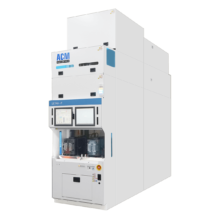
We designed the Ultra Furnace System from the ground up to meet best-in-class requirements. Its innovative design combines ACM’s proven software technology with new hardware that improves durability and reliability, as well as ACM’s process-control IP that uses a proprietary control algorithm to deliver stable control of temperature, pressure, and gas flow rate.
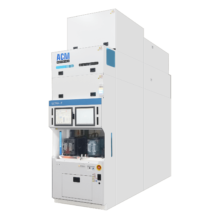
Furnace Systems—Ultra FN Atmospheric Pressure Oxidation/Anneal

Learn More

APCVD (atmospheric-pressure CVD), LPCVD (low-pressure chemical vapor deposition), and ALD (atomic-layer deposition) are various thin-film deposition methods used in semiconductor device manufacturing. Precursor gas delivery and control, deposition temperature and pressure differ significantly for each method, producing various types of semiconductor thin films with varying film uniformity, optical and electrical properties and quality, while finding their applications for various processing.

  • APCVD, unlike other CVD methods that function under vacuum, operates at normal atmospheric (760 Torr) pressure, making it faster and simpler to operate utilizing less complex equipment. However, APCVD is a high deposition rate technique used for depositing thin to thick films, typically up to several micrometers onto wafers or other types of substrates. Due to the nature of deposition, APCVD grown films are less uniform and conformal. They are used to grow epitaxial films of Si, compound semiconductors, pre-metal dielectric and passivation layers like SiO2, anti-reflection (AR) and other coatings.
  • LPCVD operates under sub-atmospheric pressure (typically 0.1 to 10 Torr), allowing for better control over gas-phase reactions to provide batch wafer processing. It uses heat to initiate a precursor gas reaction on the substrate, which forms the solid phase material. LPCVD is widely used for depositing conformal films like silicon, silicon nitride, and silicon dioxide at relatively low temperatures, minimizing thermal damage and ensuring good uniformity and lower particle contamination.
  • ALD is a sequential, single wafer, and self-limiting process that deposits material one atomic layer at a time. Our thermal ALD (furnace based) is a critical process in semiconductor manufacturing for depositing gate dielectrics, diffusion barriers, and other thin films in advanced microchips. After each precursor exposure, the excess precursor and byproducts are purged from the reaction chamber, ensuring that only the desired reaction occurs. Our thermal ALD provides exceptional film thickness and doping control, including conformality, especially for high-aspect-ratio features in advanced nodes and 3D structures.

Thermal chemical vapor deposition (CVD) is used to deposit a wide range of materials in semiconductor manufacturing, depending on the process temperature and the type of chemical precursors used.

Common materials include silicon dioxide and silicon nitride, which are used as insulating and protective layers. Polysilicon is another frequently deposited material, used for transistor gates and interconnects. Thermal CVD can also be used to deposit metal films like tungsten for contacts and vias.

For more advanced applications, thermal CVD can deposit compound semiconductors such as silicon carbide (SiC) or gallium nitride (GaN), though these often require higher temperatures and more specialized tools.

The flexibility of thermal CVD makes it a reliable method for building up many of the essential layers in integrated circuits and power devices.

The choice between atmospheric-pressure and low-pressure CVD depends largely on the application, required film properties, and manufacturing environment. APCVD offers the advantage of simpler equipment and higher deposition rates, making it suitable for less critical layers that primarily demand optimal throughput and cost efficiency. However, it may have issues like non-uniform film thickness, poorer step coverage, and increased particulate contamination due to more intense gas-phase reactions.

LPCVD provides a more controlled and stable deposition environment. The reduced pressure minimizes the possibility of unwanted gas-phase reactions and enhances conformality and uniformity of the deposited film. While LPCVD systems are more complex with lower throughput than APCVD tools, their improved film quality and process reliability often justify the tradeoff. This is particularly true for advanced semiconductor applications with device-critical layers that require precision, defect control, and step coverage.

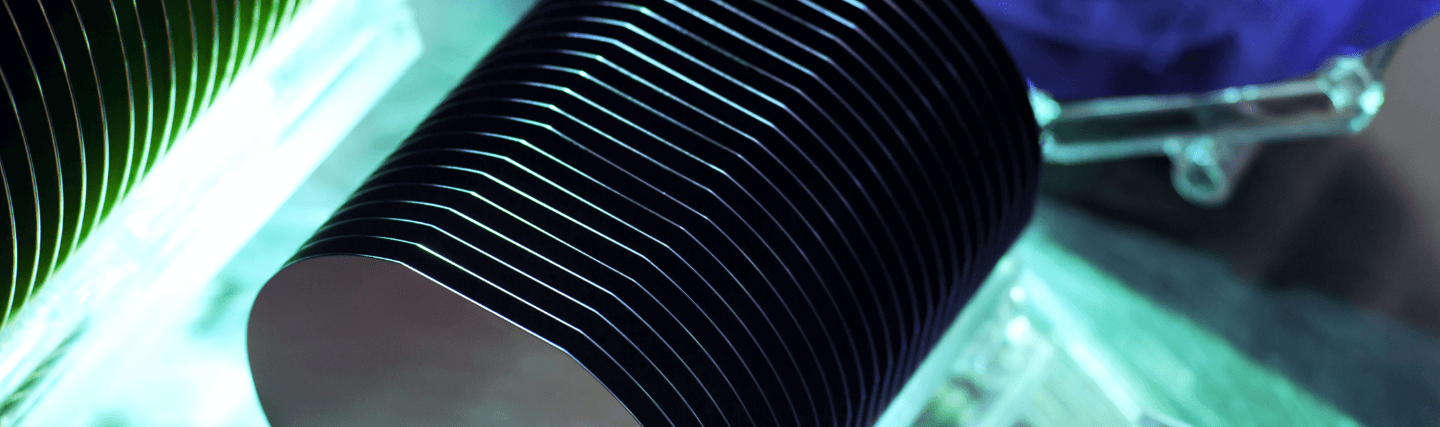
Batch processing involves loading multiple wafers (often 25 or more) into a vertical furnace where they are processed simultaneously under the same thermal and chemical conditions. This method is efficient for high-volume production, as it provides excellent throughput and lower cost per wafer. Batch processes are well suited for stable, repeatable processes where consistent results can be achieved across multiple wafers, i.e., mature process steps.

Single-wafer processing involves treating one wafer at a time in a dedicated chamber. This allows for much faster temperature ramp-up and cool-down, significantly reducing process time per wafer. Single-wafer tools offer tighter process control, better within-wafer uniformity, and the flexibility to run different recipes or process conditions on a wafer-by-wafer basis. This capability is valuable for advanced fabs, which can require frequent product changes, tighter critical dimensions, or integration with high-mix, low-volume workflows. Single-wafer systems thus offer the precision and agility needed for cutting-edge or highly customized processes.

Incorporating slip-on plates and silicon carbide (SiC) chambers into thermal oxidation systems allows manufacturers to achieve longer equipment lifespans, cleaner process conditions, and better control over film growth—all critical factors in the production of high-performance semiconductor devices.

Slip-on plates are auxiliary components that sit between the wafer carriers and the quartz furnace tube. Their primary function is to buffer thermal expansion and isolate the process area from contaminants or wear debris that might come from wafer handling or structural fixtures. They help improve tool uptime and process consistency.

SiC chambers, or SiC-coated furnace components, provide enhanced thermal and chemical stability under aggressive high-temperature conditions—such as furnaces that operate at temperatures above 1000°C. Using SiC surfaces minimizes unwanted reactions between process gases and chamber walls, reducing particle generation and maintaining a cleaner processing environment. This is especially important for high-purity applications or processing sensitive materials such as advanced dielectrics or compound semiconductors.

Contact Us

Looking for customized solutions for your thermal deposition processing?

ACM Research, Inc.
Privacy Overview

This website uses cookies so that we can provide you with the best user experience possible. Cookie information is stored in your browser and performs functions such as recognising you when you return to our website and helping our team to understand which sections of the website you find most interesting and useful.