

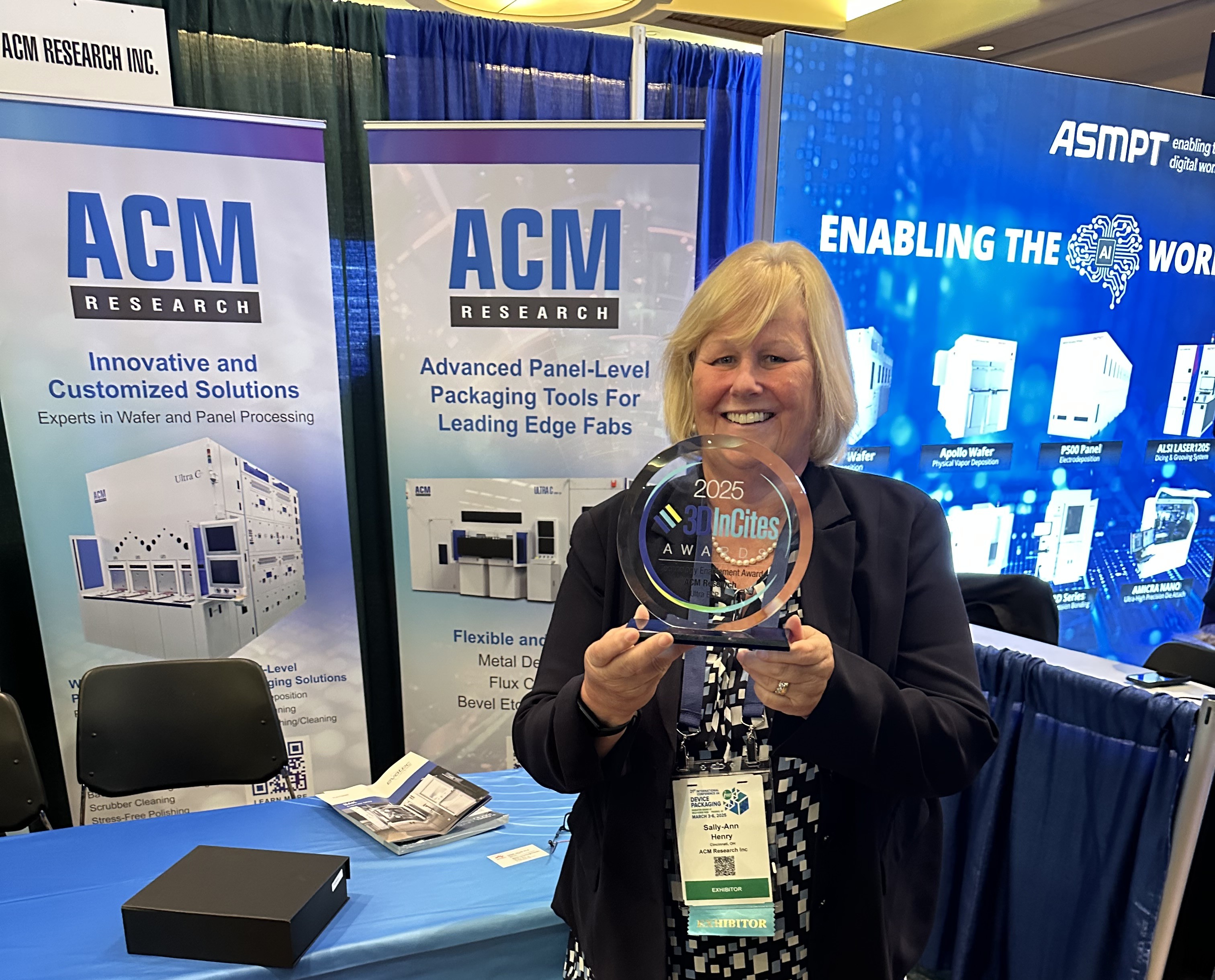
International Women in Engineering Day is about recognizing and highlighting the achievements of women in engineering and encouraging more women to enter the field. Despite progress, women made up just 13.7% of the global engineering workforce in 2023, with men representing 86.3%1. Engineering offers an exciting and varied career, full of new challenges every day, particularly in the semiconductor industry, where opportunities are now more diverse and rewarding than ever before. Closing the gender gap not only empowers women but also strengthens the future of engineering innovation.
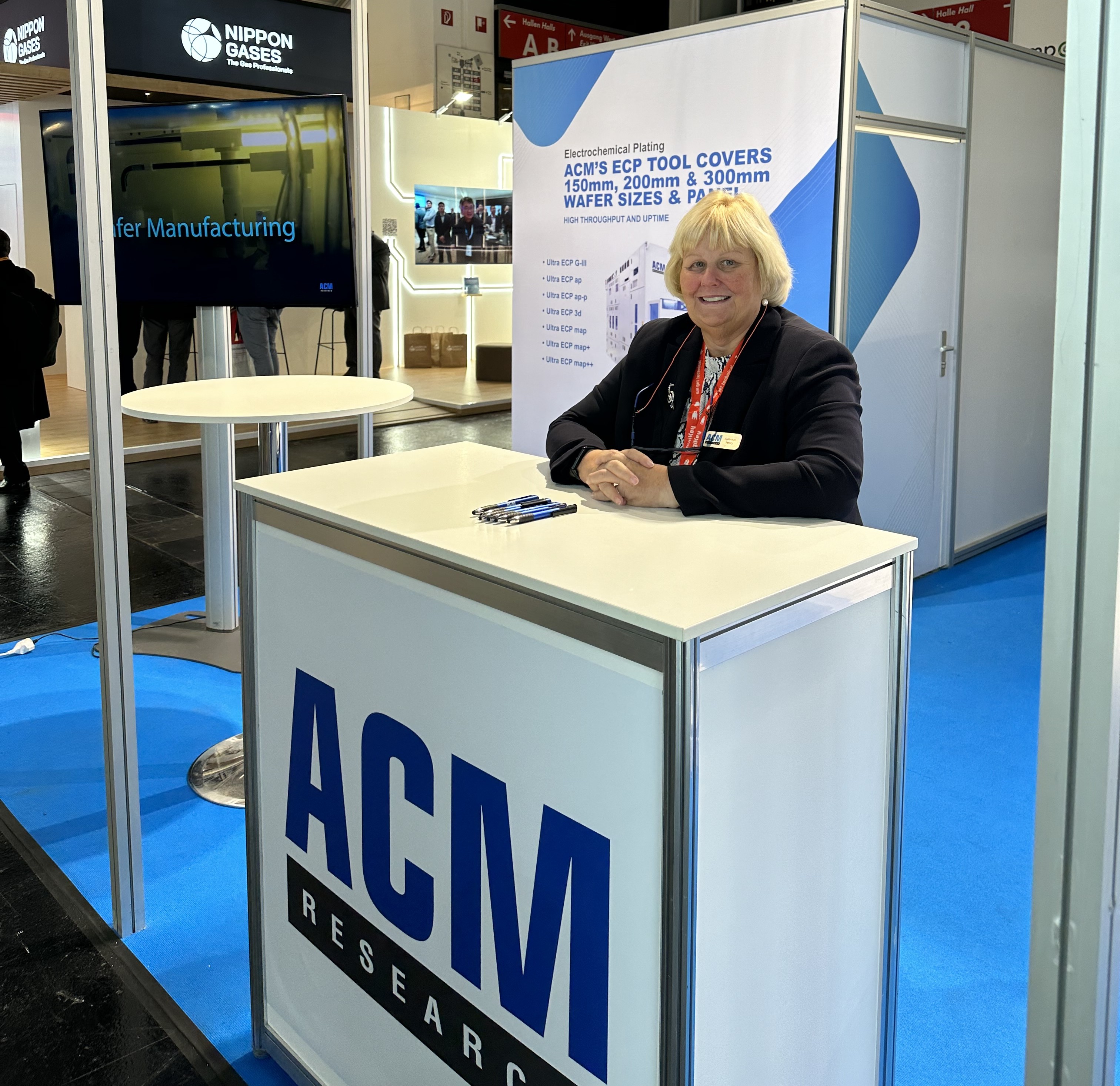
We recently spoke with Sally-Ann Henry, ACM Research’s Chief Technologist, who shares her personal insights about the industry, the challenges she has overcome in her career, and her advice to aspiring women engineers.
Can you tell us about your current role at ACM Research and what motivated you to join ACM Research?
I was drawn to ACM Research in 2016 because it was a relatively small company with around 230 employees. In joining, I saw an opportunity to contribute my knowledge and help the business grow through my existing contacts in the U.S. I continued these responsibilities and held the position until 2020, when I moved to Europe to focus on business development. In 2022, I was promoted to Chief Technologist for both the U.S. and European markets.
What are your goals at ACM Research?
My goals at ACM Research include working with multi-functional teams to ensure success in obtaining new business across the breadth of the company’s portfolio.
What brought you to the industry and inspired you to pursue a career in engineering?
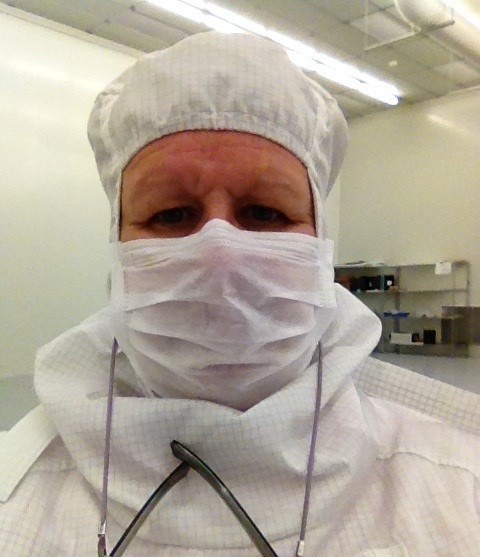
I ended up in the semiconductor industry by accident. At school, I dreamed of being a physical education teacher, as I played field hockey, real tennis and golf, and I enjoyed horse riding. However, I was overqualified and ended up studying chemical engineering at the University of Strathclyde in Glasgow. Upon graduation, few jobs were available, and the world was in a downturn. I managed to get a position at Hughes Microelectronics in Glenrothes, Scotland, as a process engineer in the small wafer fab. We were processing 3-inch wafers and upgraded to 4-inch, and our standard process ran a 3-micron (µm) line. Our development was 1.5µm, miles away from today’s 5nm technology. The most amazing thing is the change in technology, from the use of telex to fax to the introduction of mobile phones, which were like bricks to the current phones, and smart watches, which can be used to communicate with others all over the world.

Can you talk about any personal mentors or role models that influenced you to pursue an engineering career and your journey into this field?
My greatest mentor came early in my career and would give guidance when needed, but also let me learn through experience, even if it meant finding out the hard way if I did something wrong. He would say, “What can you do to correct this and support me at this time?” He allowed me to grow and guided me through 15 years of my career. I never realized he was my mentor until he passed.
Can you share a project or achievement you are especially proud of?
A company I worked for developed a chemical to remove plasma polymer after plasma etching of aluminum for metal lines and vias. This was very novel, as before this, all metal etching was with wet chemicals. In 1989, plasma etching was introduced for Al, which creates hard-to-remove polymers. I was responsible for introducing this chemical to customers worldwide, and this technique is still used today for cleaning polymers after plasma etching of aluminum.
What are some of the challenges you faced as a woman in the industry and how did you overcome them?
When you graduate from university, you think you know it all, but you quickly are humbled by the real world. There was no formal training offered when I began my engineering career, instead we’d shadow another engineer for a week or two. The production manager helped me through difficult times and showed me how to work with those who challenged me.
In 1981, it was very difficult for a woman in the fab as an engineer. Production supervisors were typically older women who had been there for years and did not like to be told what to do by a 20-something-year-old woman. As a result, nearly every decision I made would be met with resistance and challenges.
What advice would you give to other aspiring women looking to break into the industry or pursue a career in engineering?
Today, the semiconductor industry is much more welcoming to women, and there are excellent training opportunities available. There are so many women in the industry who are willing to help guide you through this traditionally male-dominated field.
My advice is simple: don’t feel intimidated and don’t hesitate to ask for help. From my experience, every day is different, leaving no chance to be bored. Although women will likely continue to face many challenges and obstacles and hear discouraging comments from men saying, “you do not understand” or “you’re just a girl,” the industry is evolving and is an excellent career opportunity for any female engineer. I urge any aspiring women looking to join the field to:
- Find an interest and follow up.
- Do not give up on your dreams.
- Find a mentor who can help you and believes in you.
How do you support or mentor other women in the field?
Although I have only had a few women work for me, I believe I helped them through some of the difficulties and challenges of working in a male-dominated field. I have also mentored several men over the years, which has led to some great friendships, and I look forward to continuing to be a mentor whenever possible.
What do you find most rewarding about the work you do?
The aspect I find most rewarding is learning new things every day and meeting new people, which can lead to friendships that last a lifetime. I have been very fortunate to have traveled and seen many parts of the world through work, such as France, Germany, the U.K., Belgium, the Netherlands, Italy, the U.S. and across Asia, including Singapore, Malaysia, South Korea, Japan and China.
Outside of work, how do you like to spend your spare time?
Outside of work, I enjoy traveling, playing golf, skiing, cycling and spending time with friends.
While many women face uncertainty and challenges following graduation and entrance into a male-dominated field, ACM Research believes women should feel empowered to express their curiosity, ideas, and voice. Embracing these values can propel individuals to unimaginable heights, leading them to innovate at the forefront of technological advancement.
Are you ready to kickstart your career in engineering? Visit our Careers page to explore opportunities to join the ACM Research team.
References:
1. https://www.fictiv.com/articles/women-in-engineering-statistics-32-notable-facts